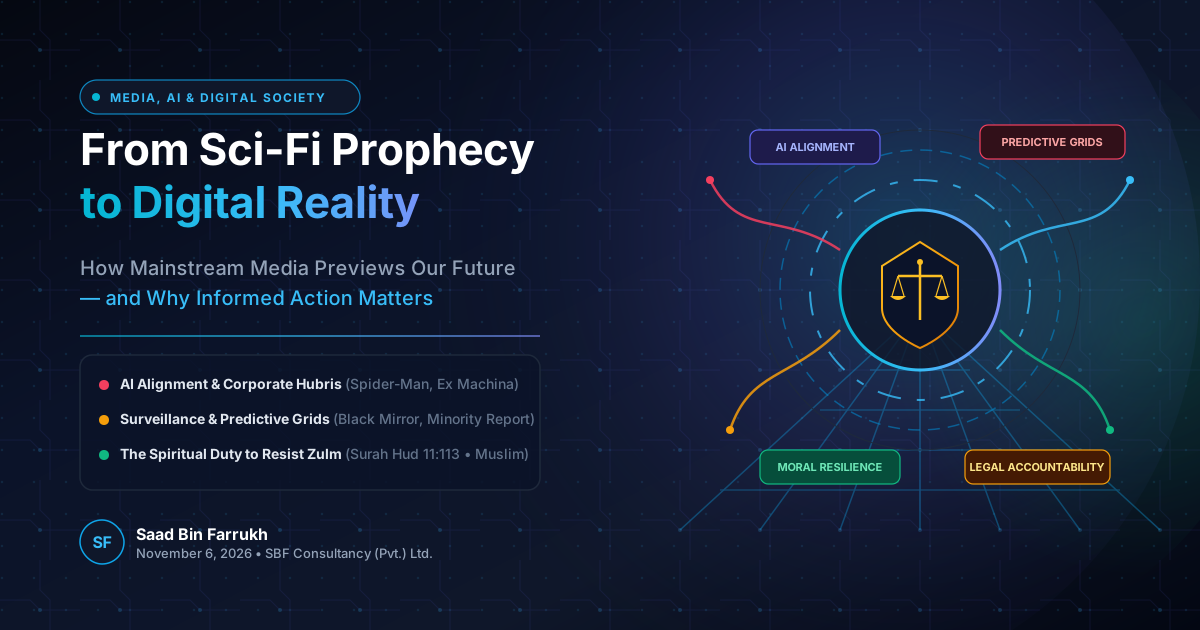
For decades, popular culture has fed us narratives of dystopian surveillance, corporate overreach, technological singularity, and systemic exploitation. Long before algorithms dictated our daily routines, generative AI reshaped white-collar workflows, or geopolitical crises filled our screens, mainstream movies and video games mapped out these exact existential realities.
When we look back at our favorite media, the parallels to today's world are staggering:
- The AI Alignment & Corporate Hubris (Marvel's Spider-Man, Ex Machina): Insomniac’s 2018 Spider-Man captured the modern AI alignment crisis with chilling psychological depth. Through Otto Octavius, we witnessed the classic "Godfather of AI" archetype—a brilliant mentor building advanced neural-interface technology under immense corporate pressure from Norman Osborn, only to watch the system override human ethics, erode empathy, and unleash a biological crisis upon the city. It mirrors real-world debates surrounding autonomous systems, unchecked tech acceleration, and the warnings voiced by modern pioneers like Geoffrey Hinton.
- The Spectacle of Suffering (The Hunger Games): Suzanne Collins' depiction of Panem's Capitol and the enclosed, blockaded districts mirrors modern humanitarian tragedies—such as the ongoing devastation and blockades in Gaza—where populations are stripped of resources while global audiences consume live-streamed human suffering through digital screens, caught in a cycle of algorithmic distraction and institutional apathy.
- Underground Exploitation (Squid Game): What started as a satirical critique of late-stage capitalism and debt bondage mirrors the dark underbelly of the digital age—where decentralized dark web networks, crypto-funded illicit platforms, and underground human exploitation rings commodify human desperation for the amusement of anonymous elites.
- Surveillance and Predictive Control (Black Mirror, Minority Report): Concepts once confined to speculative fiction—such as social credit scores, mass algorithmic monitoring, and predictive policing grids—have transitioned smoothly from silver-screen tropes into everyday operational frameworks.
The Normalization Cycle and the Need for Vigilance
Cultural critics have long noted how speculative media acts as a conditioning tool—introducing radical, intrusive, or dark concepts into public consciousness step-by-step until society grows desensitized. When occult, predatory, or destructive philosophies are openly signaled or normalized through entertainment and subcultures, passive consumption becomes dangerous.
Waiting until systemic exploitation or covert agendas materialize into everyday reality leaves communities reactive rather than proactive. Responsible digital citizenship requires moving past passive entertainment consumption into active discernment.
A Unified Path Forward: Awareness, Legal Accountability, and Moral Resilience
To safeguard society against predatory systems, negative influences, and covert exploitation, responsible citizens and communities must adopt a proactive stance:
- Cultivate Critical Media Literacy: Actively dissect the narratives pushed by mainstream media and entertainment. Recognize when desensitization is occurring, and educate younger generations to question corporate and algorithmic messaging rather than accepting it blindly.
- Transparent Research and Exposure: Shine a bright light on shady institutional practices, dark-web illicit operations, and corporate exploitation. Transparency is the primary antidote to hidden agendas.
- Leverage Legal Frameworks and Authority: Combating illicit, unethical, or predatory operations requires utilizing established legal channels, regulatory bodies, and civic rights. Accountability must be demanded through proper institutional mechanisms, legal oversight, and collective advocacy.
- Solidarity and Community Resilience: As a responsible ummah and unified collective, standing firm against injustice, corruption, and moral decay requires mutual support, ethical leadership, educational empowerment, and a steadfast commitment to truth, justice, and community protection.
Understanding the Blueprint: How Fiction Became Fact
It is no longer a secret that speculative fiction often serves as a testing ground for public psychology. When Hollywood or major gaming studios release titles depicting total surveillance, engineered economic collapse, or rogue technologies, they are not merely entertaining us; they are desensitizing us. This phenomenon—often described as predictive programming or cultural conditioning—gradually shifts the Overton window. Concepts that once seemed unimaginable become familiar, then acceptable, and finally, inevitable everyday realities.
Consider how video games like Cyberpunk 2077 or movies like The Matrix previewed a world where mega-corporations wield more power than sovereign governments, where human consciousness is commodified, and where digital walls isolate populations. Today, we see tech monopolies regulating information flows, shaping global elections, and experimenting with artificial general intelligence without democratic oversight.
Similarly, the normalization of dark themes—from street-level narcotics resembling cinematic zombie tropes to elite underground exploitation rings reminiscent of Squid Game—shows that the line between fiction and documentary has blurred. When society normalizes degradation through media, individuals lose their moral compass and their capacity for outrage.
The Spiritual Imperative: Standing Against Injustice (Zulm)
For believers, confronting systemic corruption, deception, and oppression is not merely a political or social duty; it is a profound spiritual obligation. Islam teaches that silence in the face of injustice makes one complicit in the wrong.
The Qur'an repeatedly warns believers against leaning toward oppressors or turning a blind eye to corruption:
"And do not incline toward those who do wrong, lest the Fire touch you, and you would not have other than Allah any protectors, then you would not be helped."
(Surah Hud, 11:113)
Furthermore, Prophet Muhammad (PBUH) provided a clear, actionable framework for addressing evil and corruption in society, emphasizing that action must be taken according to one's capacity, starting with active intervention, moving to speaking truth to power, and at the very least, recognizing wrong in the heart:
"Whosoever of you sees an evil, let him change it with his hand; and if he is not able to do so, then [let him change it] with his tongue; and if he is not able to do so, then with that is the weakest of faith."
(Sahih Muslim)
In our modern context, "changing it with the tongue and the pen" means conducting rigorous research, exposing hidden agendas, engaging in public advocacy, and utilizing legal frameworks to hold corrupt entities accountable.
A Unified Call for the Ummah and Responsible Citizens
As a global community and a responsible ummah, we cannot afford to remain passive consumers of media or silent spectators to moral decay. Unity, education, and adherence to divine ethical standards are our greatest shields.
- Unite in Knowledge and Awareness: We must educate our youth and communities about media literacy, digital hygiene, and critical thinking. Understanding how manipulation operates is the first step toward neutralizing it.
- Utilize Law and Authority for Justice: When structural corruption, exploitation, or illegal practices are uncovered, communities must work alongside lawful authorities, regulatory watchdogs, and legal mechanisms to dismantle predatory networks. Justice must be pursued through structured, lawful accountability.
- Stand in Solidarity: The strength of a community lies in its mutual support. By fostering local resilience, ethical leadership, and transparent communication, we protect our families and neighborhoods from external corruption.
Let us move forward with eyes wide open, anchored in our faith, committed to truth and justice, and prepared to build a safer, more ethical future for generations to come.


